Jakarta, 3 September 2026 – Climate change and growing demand for energy and natural resources are placing the building sector in an increasingly critical position within Indonesia’s sustainable development agenda. Buildings are not only places where people live, work, learn, and carry out everyday activities, but also part of a wider system that consumes energy, water, and materials and generates emissions throughout their life cycle.
However, the adoption of green building principles in Indonesia still needs to be expanded. Awareness of how buildings can use energy and resources more efficiently remains uneven, while the transition toward more sustainable buildings requires the involvement of a broad range of stakeholders, including government, industry, academia, professionals, building owners and managers, and the communities that use these spaces.
In response to this need, Green Building Council Indonesia (GBCI) has declared September as Indonesia Green Building Month, to be commemorated annually as a momentum to raise public awareness, strengthen collaboration, and encourage concrete action across the building sector. The declaration carries an aspiration to encourage all buildings in Indonesia to operate at Net Zero by 2030, contributing to Indonesia’s broader Net Zero Emission target for 2060.
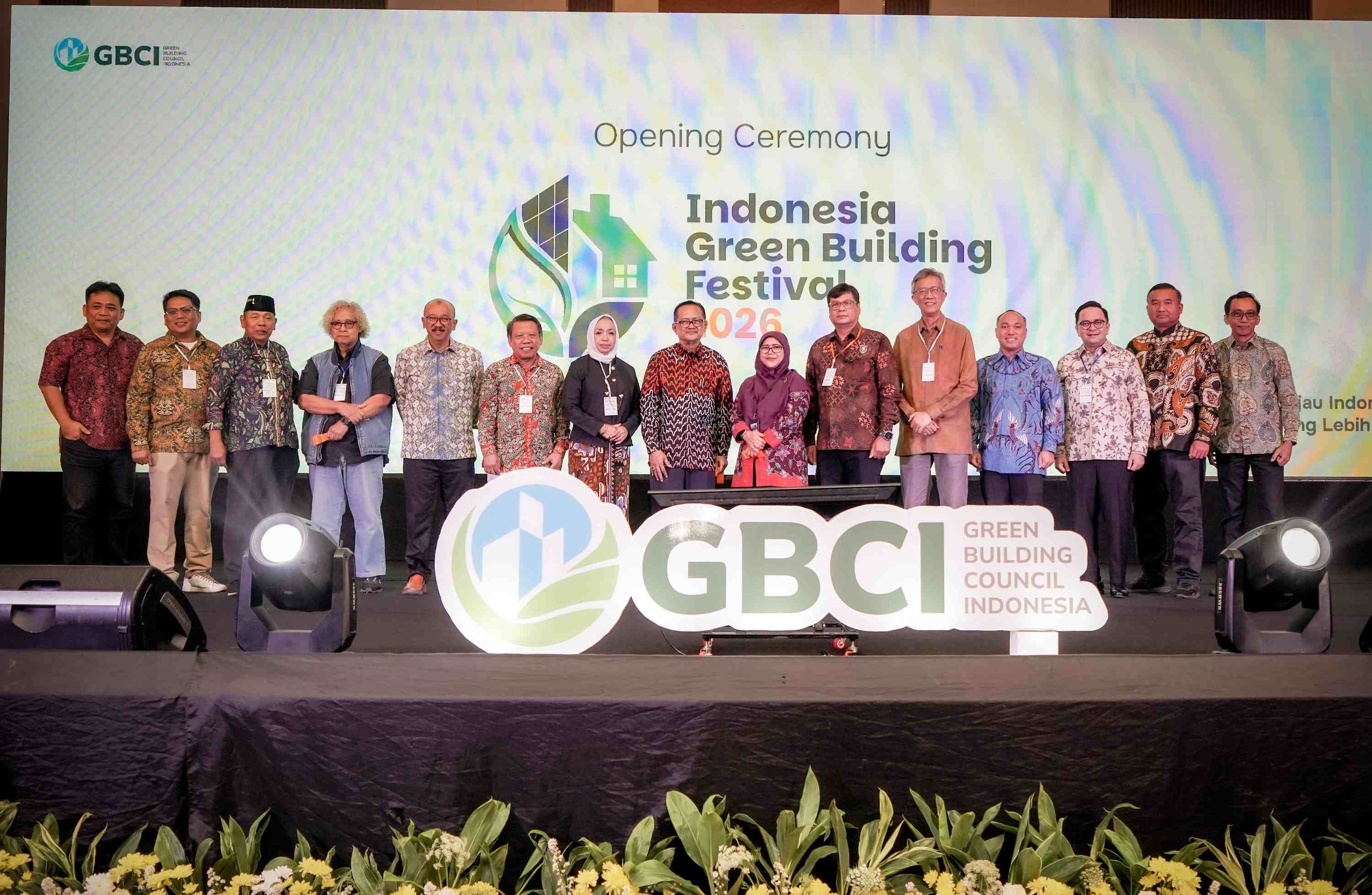
The declaration was announced during the Opening Ceremony of Indonesia Green Building Festival (IGBF) 2026 at Patrajasa Yudistira Grand Ballroom, Jakarta, on Thursday, 3 September. The event brought together approximately 400 participants representing government, industry, academia, professionals, communities, and other stakeholders across the building sector.
Government, Industry, and Green Building Experts Share a Sense of Urgency
Accelerating the adoption of green buildings was one of the key messages of the IGBF 2026 Opening Ceremony. The opening program brought together perspectives from government, industry, and the green building movement on their respective roles in advancing more sustainable development.
“Indonesia’s green transformation requires change to take place everywhere and involve many different parties. Every building, wherever it is located, has a role to play in creating healthier, more efficient, and sustainable environments. Through the Indonesia Green Building Festival, we want to turn this spirit from individual buildings into a shared movement, to build Indonesia and create better lives,” said Ignesjz Kemalawarta, Chairman of Green Building Council Indonesia.
The opening program also featured Wiza Hidayat, Steering Committee of Indonesia Green Building Festival 2026; Cristina Gamboa, Chair of the World Green Building Council, through a video address; and Meike Kencanawulan Martawidjaja, Acting Director General of Human Settlements, Ministry of Public Works.
The diverse stakeholders represented at the IGBF 2026 opening reflect the breadth of the ecosystem that needs to move forward together. Improving building performance requires interconnected support, from policies and regulations, industry and technology readiness, research and competency development, to the implementation and everyday use of buildings.
Hundreds of Experts and Stakeholders Declare Indonesia Green Building Month
With this declaration, September is established as Indonesia Green Building Month, creating an annual momentum to keep green buildings at the center of public conversations and Indonesia’s sustainable development agenda.
The approximately 400 participants attending the IGBF 2026 Opening Ceremony represented a much broader ecosystem that needs to work together. Government plays a role in establishing policies and enabling ecosystems; industry in delivering solutions and innovation; academia in strengthening research and knowledge; and professionals in applying these principles in practice. Meanwhile, building owners, managers, and occupants influence how buildings operate and deliver value.
Achieving the ambition for buildings to operate at Net Zero by 2030 requires improved performance throughout the building life cycle. This includes more efficient use of energy and water, greater use of renewable energy, more responsible material selection, waste reduction and management, and building operations that maintain efficiency while ensuring occupant comfort.
Ultimately, the benefits of green buildings extend beyond emissions reduction. Buildings that are better designed and operated can use energy and water more efficiently, create healthier and more comfortable spaces, and reduce operational costs. Improving building performance is therefore also part of a broader effort to create a better quality of life for communities.
From Declaration to Action Across Indonesia
At the industry and professional level, GBCI introduced several green building initiatives and tools, including the launch of GREENSHIP Data Center and GREENSHIP Existing Building 1.2. These initiatives respond to the evolving needs of the building sector while supporting improved building performance across both facilities with specialized operational requirements and existing buildings already in operation.
IGBF 2026 also features a series of talk shows and knowledge-sharing sessions bringing together perspectives from government, industry, academia, and communities. Discussions cover sustainable materials, low-carbon construction, circular economy, energy, Net Zero roadmaps, building performance, research and innovation, and market transformation.
Alongside strengthening knowledge and practices, IGBF also recognizes and celebrates organizations and individuals contributing to the green building and sustainability movement, including higher education institutions that play an important role in developing knowledge and preparing future generations.
To broaden the reach of the movement, the IGBF 2026 program will also take place through a series of GBCI Goes to 5 Cities activities and Kampung outreach programs, bringing conversations and sustainable practices to more regions and communities. This approach is part of GBCI’s effort to make green building more inclusive and relevant to everyday life.
Sustainability film screenings are also part of the festival, providing another medium for opening conversations about the environment, sustainability, and the ways people interact with the built environment.
Together, these activities are designed to build stronger awareness and turn understanding into action, ensuring that green buildings are not limited to concepts or technical standards, but become part of meaningful change that people can experience in their everyday lives.
Building Awareness That Leads to Change
Discussions around low-carbon buildings ultimately go beyond how the construction sector can reduce its environmental impact. Buildings are part of everyday life, providing spaces where people live, work, learn, and connect.
For this reason, low-carbon development needs to go hand in hand with efforts to create spaces that are healthier, more comfortable, more efficient, and capable of meeting people’s needs over the long term. Decisions about building design, materials, and performance made today will help shape the quality of the built environment experienced by future generations.
Through Indonesia Green Building Festival 2026, GBCI carries the spirit of “Bangun Indonesia” as an invitation to broaden participation in sustainable development. The Bandung Chapter is one of the platforms bringing together knowledge, experience, innovation, and the real needs of different sectors.
The Indonesia Green Building Festival 2026 will continue throughout September through a range of activities and collaborations across different regions. GBCI invites professionals, academics, industry players, communities, young people, and the wider public to take part, expand the conversation, and build Indonesia together through more sustainable building practices and a more sustainable built environment.