Tangerang, 17 September 2026 — Climate change, biodiversity loss, natural resource management, and sustainable development are increasingly part of public conversation. Yet understanding an issue through data and information does not always mean feeling connected to it.
Amid the complexity of environmental challenges, the way a message is communicated plays an important role in building awareness and engagement. Data can illustrate the scale and urgency of an issue, while stories can show how that issue takes shape in people’s lives. Through stories about places, communities, livelihoods, and everyday experiences, environmental issues can be understood through perspectives that feel more immediate and tangible.
This connection matters because meaningful change requires engagement. When people can see the relationship between environmental challenges and the spaces they inhabit, the resources they use, and the decisions they make every day, sustainability can become part of everyday life rather than an issue that exists separately from it.
For Green Building Council Indonesia (GBCI), strengthening public engagement is part of its efforts to broaden the sustainability movement. The built environment is ultimately created for, used by, and inhabited by people. Transforming it into a more sustainable built environment therefore requires broader public understanding, awareness, and participation.
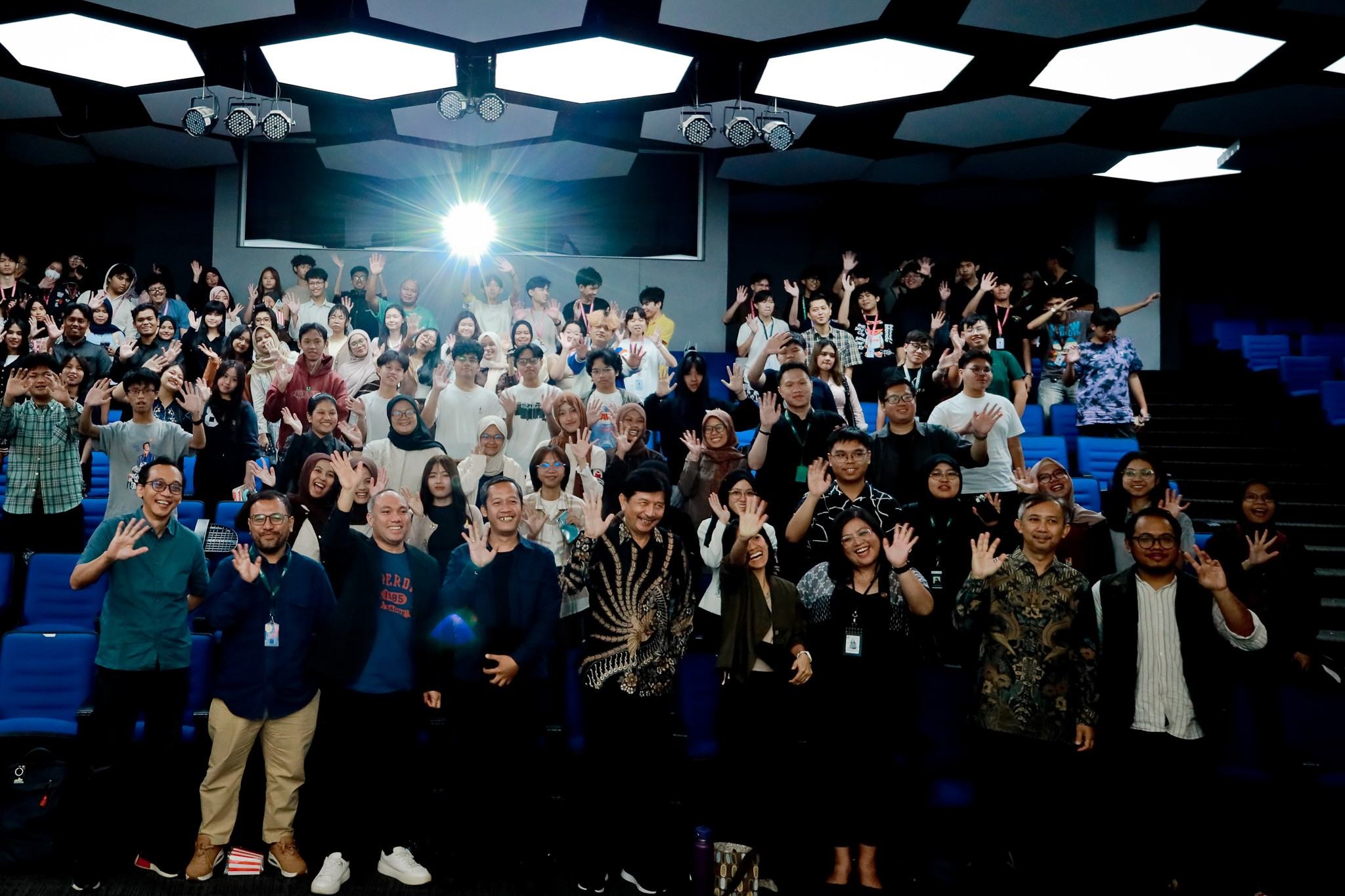
With this in mind, GBCI presented Bangun Lewat Cerita: Environmental Film Screening as part of the Indonesia Green Building Festival (IGBF) 2026. The event used film and storytelling as a medium to bring environmental issues closer to the public while creating space for conversations on how awareness can grow into meaningful action.
Held on Thursday, 17 September 2026, at the Lecturer Theatre of Universitas Multimedia Nusantara (UMN) in Tangerang, Banten, the event was supported by PT Semen Indonesia (Persero) Tbk (SIG), Saint-Gobain Indonesia, PT Sertifikasi Bangunan Hijau, Arkadia Works, Anatman Pictures, and Universitas Multimedia Nusantara (UMN). The collaboration brought together organizations from different sectors to expand conversations around sustainability and environmental action.
“Stories can help us see environmental issues from a more human perspective. When an issue is presented through real experiences and everyday life, we have an opportunity to understand it and feel more connected to it. From there, awareness can grow and conversations about change can begin,” said Ar. Prasetyoadi, IAI., IAP., GP., Vice Chairperson of Green Building Council Indonesia.
Three Films, Three Perspectives on Change
The event opened with remarks from Ar. Prasetyoadi, IAI., IAP., GP., Vice Chairperson of GBCI, followed by remarks from Maria Advenita Gita Elmada, M.Si., Center for Sustainability Manager, Universitas Multimedia Nusantara, and Radi Manggala, S.E., LL.M., Director of Television and Media, Kementerian Ekonomi Kreatif.
The opening session was followed by the screening of three environmental films through GBCI’s collaboration with Anatman Pictures, a production house focused on stories and issues related to sustainability.
Each film presented a different context for understanding environmental change. “Saat Orang Baik (tidak) Diam: Build Back Better and Sustainable” invited audiences to look at the process of rebuilding communities through a more sustainable approach.
“Kehutanan yang Maha Esa” explored the relationship between people and forests, highlighting the importance of ecosystems in supporting life.
Meanwhile, “Building Transformative Change for Sustainable Future in Riau Landscape” brought audiences to the Riau landscape to explore efforts by different stakeholders to drive change toward a more sustainable future.
Together, the three films showed how environmental challenges emerge in different contexts while remaining closely connected to people, the places they call home, and the choices they make. By presenting these perspectives through film, environmental issues can be experienced in ways that are more concrete and personal.
From Environmental Stories to Everyday Action
The stories presented on screen continued into a live conversation through a talkshow titled “Stories That Make Us Care: From Environmental Stories to Everyday Action.”
The discussion featured Soraya Cassandra, CEO & Founder of Kebun Kumara, and Abrian Maulana Azmi, Cinematographer & Documentary Film Director at Anatman Pictures. The session was moderated by Wiza Hidayat, Director of Communication & Partnership, Green Building Council Indonesia.
The conversation explored how storytelling can build environmental awareness, how visual experiences can communicate sustainability issues in ways that feel more accessible to wider audiences, and how a story can become a starting point for reconsidering the relationship between people and their surrounding environment.
The discussion also connected environmental storytelling with everyday action. Sustainability can take shape through many forms of daily decision-making, from how resources are used and how spaces are understood to the choices that collectively shape the environments in which people live.
For GBCI, this approach complements broader transformation efforts in the built environment. Policies, technologies, standards, and certification systems all play important roles in driving change, while human understanding and engagement remain essential to putting those systems into practice.
Through Bangun Lewat Cerita, GBCI expands the conversation around sustainability through a medium that can reach audiences beyond technical discussions of green buildings. Film provides an entry point for exploring environmental issues, while dialogue creates an opportunity to connect those issues with everyday experiences and actions.
The event was part of Indonesia Green Building Festival (IGBF) 2026, GBCI’s month-long series of activities throughout September 2026 that brings together diverse stakeholders to exchange knowledge, experiences, and ideas on green buildings and sustainability.