Bandung, 9 September 2026 – Reducing the carbon footprint of the building sector is closely linked to decisions about how buildings are designed and constructed, as well as the materials used throughout the process. As Indonesia’s development needs continue to grow, material innovation is becoming increasingly important in ensuring that development can progress while reducing its environmental impact.
Construction materials play a role from the earliest stages of development and have implications for a building’s carbon footprint, resource consumption, and performance throughout its operational life. For this reason, discussions around low-carbon buildings need to go beyond product selection alone. Material choices need to be considered as part of an integrated approach that brings together design, standards and policies, construction methods, building performance, user needs, and the capacity of industry to provide solutions at scale.
The challenge becomes more complex when low-carbon principles need to be applied across different types and scales of development. Commercial buildings, public facilities, housing, and larger urban areas have different needs, scales, and characteristics. A low-carbon approach therefore cannot be viewed from a single perspective. It requires stronger connections between policy, project needs, design, building performance, urban planning, market demand, and industrial innovation.
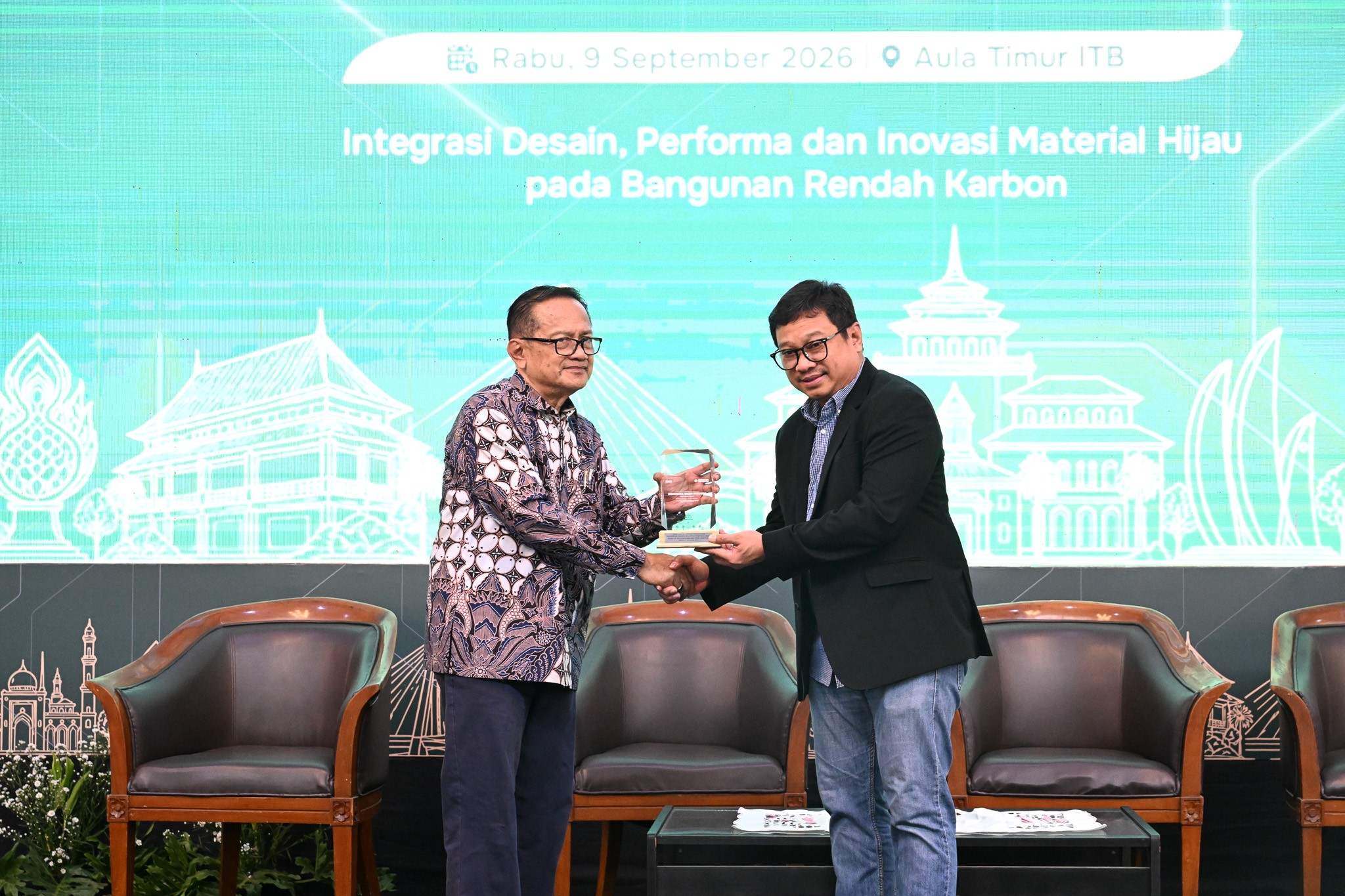
To explore these challenges and opportunities from multiple perspectives, Green Building Council Indonesia (GBCI) hosted “Bangun Indonesia: Bandung Chapter”, part of the Indonesia Green Building Festival (IGBF) 2026, on Wednesday, 9 September 2026, at the East Hall of Institut Teknologi Bandung (ITB).
Under the theme “Integrating Design, Performance, and Green Material Innovation for Low-Carbon Buildings,” the event was organized through a collaboration between GBCI and PT Semen Indonesia (Persero) Tbk (SIG). Bandung Chapter brought together government representatives, academics, practitioners, urban planners, and industry stakeholders to explore how different parts of the development ecosystem can work together toward a lower-carbon built environment.
Through the forum, GBCI sought to bring the conversation around low-carbon buildings closer to real-world decisions and needs within the construction sector, while creating space for knowledge exchange among stakeholders with different roles throughout the development process.
“As development needs continue to grow, we need to ensure that this growth is accompanied by efforts to reduce environmental impact. Material innovation is an important part of this because material choices are closely connected to carbon footprint and building performance. However, materials cannot stand alone. We need stronger connections between policy, design, performance, urban planning, market needs, and industry readiness,” said Ir. Ignesjz Kemalawarta, MBA., GP., Chairperson of Green Building Council Indonesia (GBCI).
According to Ignesjz, creating these connections requires collaborative platforms where stakeholders can understand challenges and opportunities from different perspectives. This is where GBCI continues to play its role as an independent, non-profit professional organization advancing sustainable building practices in Indonesia.
“GBCI’s role is to bring together knowledge, standards, practices, and stakeholders so that the green building agenda can be implemented in practice. Transformation requires more than new technologies or products. It also requires capacity building, a shared understanding, and cross-sector collaboration,” Ignesjz added.
Building the Foundation: Policy, Project Needs, and Market Demand
The Bandung Chapter program opened with remarks from Ir. Ignesjz Kemalawarta, MBA., GP., followed by remarks from Rizki Kresno Edhie Hambali, President Director of Solusi Bangun Indonesia.
In his remarks, Rizki highlighted Solusi Bangun Indonesia’s continued commitment, as a GBCI Corporate Founder, to advancing the green movement from an industry perspective. He emphasized that sustainable development requires collaboration across the entire construction ecosystem.
“For Solusi Bangun Indonesia, sustainability is not only a corporate goal, but also one of the key foundations of how we conduct our business and operations to deliver products and solutions that respond to both current and future development needs. This effort needs to be pursued comprehensively, from design and material selection to construction and building operations, so that development needs can continue to be met with an increasingly lower carbon footprint,” said Rizki.
The first panel discussion, “Building the Foundation: Policy, Project Needs, and Market Demand,” explored how the direction of low-carbon development is shaped by government policy, development needs, and evolving market dynamics.
Dr. Muhammad Nur Fajri Alfata, S.T., M.T., Young Expert in Building and Settlement Area Governance, presented “Building and Strategic Infrastructure Policy Direction: Green Building Standards and Public Expenditure as Drivers for Low-Carbon Materials.”
Meanwhile, Rachmat Pramudji, S.S.T., M.T., representing the Ministry of Housing and Settlement Areas (PKP), discussed “Strategies for Housing and Settlement Development: Balancing the Scale of Needs, Efficiency, and the Use of Sustainable Materials.”
From a design and market perspective, Ar. Prasetyoadi, IAI., IAP., GP., Vice Chairperson of GBCI, presented “Green Building Design and Market Demand: Why Low-Carbon Buildings Are Becoming a Preference for Investors and Tenants.”
The discussion was moderated by Ir. Harry Soeherman, M.Ars., IAI., GP., Chairperson of GBCI Bandung–West Java Chapter.
The discussion highlighted how the transition toward low-carbon buildings is increasingly shaped by multiple considerations. Policy can establish direction and standards, project requirements determine the scale and challenges of implementation, while the market is increasingly considering building quality and performance in investment and space-use decisions.
17 Years of Building the Green Building Movement
Amid the Bandung Chapter program, GBCI also marked its 17th anniversary and its continued efforts to advance sustainable building practices in Indonesia.
Established in 2009 as an independent, non-profit professional organization, GBCI has contributed to the development of Indonesia’s green building ecosystem through knowledge sharing, capacity building, standards and certification, and collaboration with stakeholders across sectors.
The anniversary provided an opportunity to reflect on this journey while reinforcing GBCI’s commitment to making green buildings increasingly relevant and applicable to more people and organizations across Indonesia.
Addressing Challenges from Materials to the Urban Scale
Following the discussion on policy, project needs, and market demand, the next panel focused on implementation through the theme “Addressing the Challenges: Material Innovation, Urban Design Vision, and Industry Readiness.”
Ar. Ir. Dewi Larasati, S.T., M.T., Ph.D., GP., IAI., Associate Professor, Building Technology Research Group, SAPPK Institut Teknologi Bandung, explored “Building Materials and Technologies for Affordable Housing: Clinker Substitution and Low-Carbon Housing Construction.”
The discussion then expanded from the individual building to the broader urban scale. Ardzuna Sinaga, S.T., M.U.D.D., Secretary General of the Indonesian Association of Urban Designers, presented “From Building Units to Urban Areas: The Role of Urban Design in Integrating Low-Carbon Materials into Sustainable Built Environments.”
From the industry perspective, Arief Sutanto, S.T., Product Advocacy Specialist, Brand & Product Management, PT Semen Indonesia (Persero) Tbk (SIG), presented “Cement Industry Readiness: SIG’s Low-Carbon Product Portfolio for Buildings, Housing, and Infrastructure.”
Together, these perspectives demonstrated that material innovation needs to be considered within a broader development context. Low-carbon material solutions need to be supported by appropriate design, strong building performance, integrated urban planning, and an industry capable of delivering solutions that respond to real development needs.
The collaboration between GBCI and SIG through Bandung Chapter forms part of an effort to connect sustainability perspectives with innovation within the materials industry. Industry participation is essential in bridging the development of low-carbon solutions with their practical application in the field.
Building Indonesia, from Buildings to Everyday Life
The discussion around low-carbon buildings ultimately goes beyond how the construction sector can reduce its environmental impact. Buildings are part of everyday life, providing spaces where people live, work, learn, and carry out their daily activities.
Low-carbon development therefore needs to go hand in hand with efforts to create spaces that are healthier, more comfortable, more efficient, and capable of meeting people’s needs over the long term. Decisions about building design, materials, and performance made today will help shape the quality of the built environment experienced by future generations.
Through Indonesia Green Building Festival 2026, GBCI carries the spirit of “Bangun Indonesia” as an invitation to broaden participation in sustainable development. Bandung Chapter is one of the platforms bringing together knowledge, experience, innovation, and the real needs of different sectors to advance a more sustainable built environment in Indonesia.