The impacts of climate change are becoming increasingly evident across cities in Indonesia. Rising temperatures, more frequent extreme rainfall, and growing flood risks highlight the need to integrate climate resilience into the way cities are planned, designed, and built. In this context, the building sector has a critical role to play. Beyond contributing to carbon emissions, buildings must also protect people from the impacts of climate change through more sustainable design, construction, and operation.
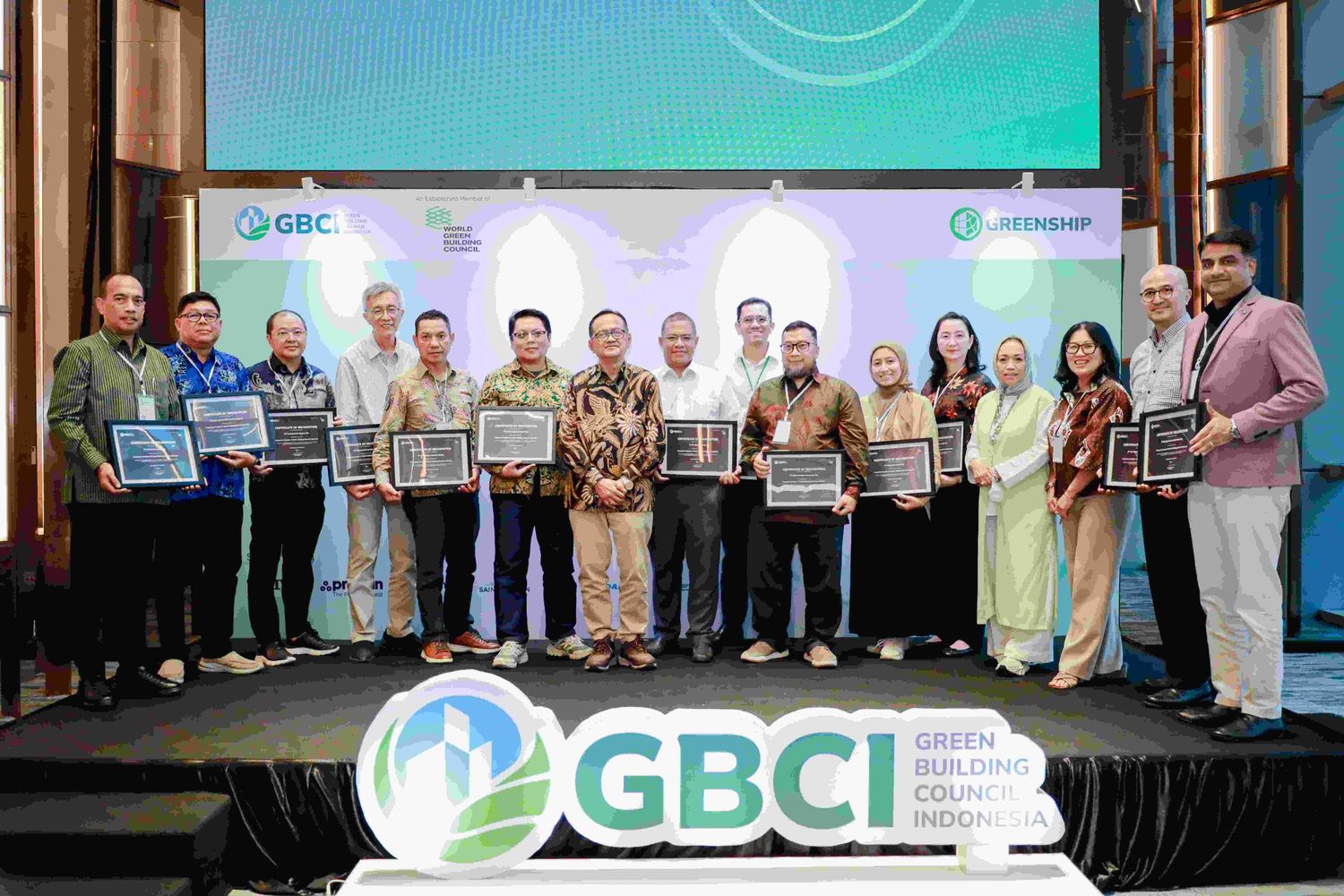
To address this challenge, Green Building Council Indonesia (GBCI) hosted the Annual Community Gathering 2026 under the theme "Building Forward: Accelerating Green Buildings for Climate Resilient Indonesia" at Toto Wisma 81, West Jakarta. The event served as a collaborative platform for stakeholders to exchange knowledge, share best practices, and strengthen partnerships in advancing a more climate resilient built environment.
As a non profit organization dedicated to promoting sustainable development in Indonesia, GBCI continues to drive the transformation of the building sector through the development of green building standards, professional capacity building, certification programs, and cross sector collaboration. These efforts support low carbon development while strengthening urban resilience and improving quality of life.
GBCI Chairperson Ignesjz Kemalawarta emphasized that climate change cannot be addressed by a single stakeholder alone.
"Building climate resilience requires strong collaboration. Government, industry, academia, and communities each have complementary roles in delivering buildings that are more adaptive, efficient, and sustainable. Through Annual Community Gathering 2026, GBCI aims to bring these stakeholders together so that collaboration can evolve into tangible action that benefits our cities and communities."
As part of this commitment, Annual Community Gathering 2026 featured a panel discussion titled "Climate Resilient Buildings for Climate Resilient Cities," which explored practical approaches to strengthening climate resilience in the building sector. The discussion highlighted the importance of integrating public policy, international frameworks, and industry best practices to improve the resilience of buildings against climate related risks.
The panel featured Iwan Kurniawan, Head of the Development and Environment Bureau at the Regional Secretariat of the Jakarta Provincial Government, who discussed urban policy and climate resilience; Erlyana Anggita Sari, Technical Specialist at the International Finance Corporation (IFC), who introduced the Building Resilience Index as a framework for supporting climate adaptation in buildings; and Farida Lasida, Country Managing Director of the Global Buildings Performance Network (GBPN), who shared international best practices in improving building performance as part of broader climate resilience strategies.
The ideas and partnerships fostered through Annual Community Gathering extend beyond a single day of discussion. As a follow up, GBCI introduced its strategic agenda for 2026, which focuses on strengthening professional capacity, expanding cross sector collaboration, and accelerating the adoption of green buildings across Indonesia. Presented by Wiza Hidayat, Director of Communication & Partnership at GBCI, the agenda includes a series of initiatives, including the Indonesia Green Building Festival this September in support of World Green Building Week. Through these programs, GBCI aims to facilitate knowledge exchange, broaden stakeholder participation, and translate dialogue into measurable action.
This commitment was also reflected in the event itself, which was organized as a green event. GBCI measured the carbon emissions generated by participants' travel to the venue and will offset these emissions through a carbon offset program. This initiative demonstrates that GBCI's commitment to sustainability extends beyond discussions and strategic programs to the way its events are planned and delivered.
Through Annual Community Gathering 2026, GBCI is optimist that the collaboration established during the event will continue beyond dialogue and lead to meaningful implementation across sectors. When buildings are designed to be more efficient, adaptive, and resilient to climate change, the benefits extend beyond the environment to the people who live, work, and interact within them every day.