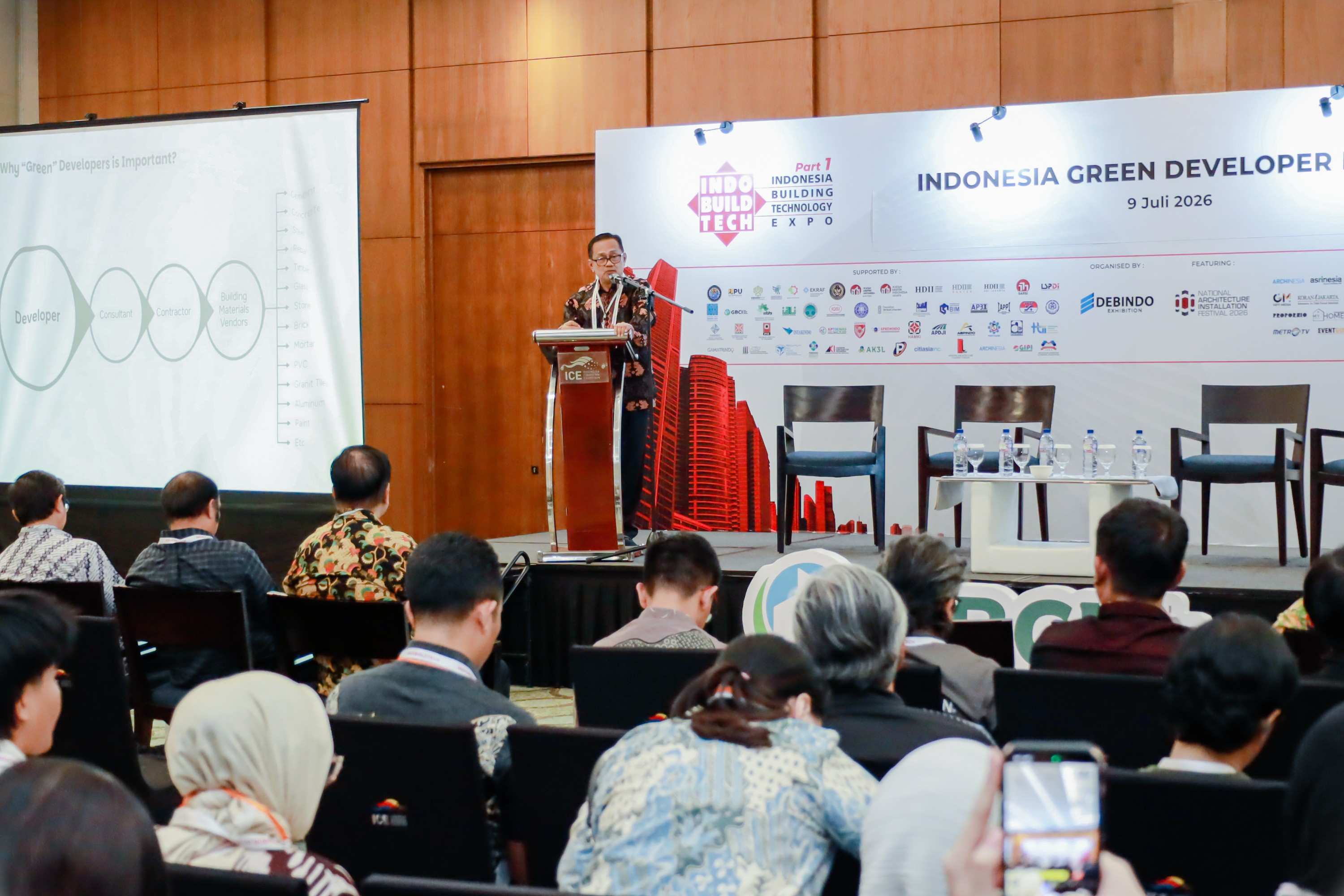
Tangerang, 9 July 2026 - The property sector is playing an increasingly strategic role in addressing the challenges of climate change. While the sector contributes significantly to carbon emissions, it also has substantial potential to deliver more efficient, low-carbon buildings while creating long-term economic and social value. Realizing this transformation requires stronger collaboration among property developers, investors, financial institutions, consultants, government, and other stakeholders across the built environment.
Responding to this need, Green Building Council Indonesia (GBCI) hosted the Indonesia Green Developer Forum 2026, themed “Connecting Leaders Through Sustainability Growth,” at Garuda 2, ICE BSD City, as part of the Indo Build Tech exhibition. The forum brought together industry leaders to exchange insights, discuss challenges, and explore opportunities to accelerate the adoption of green building and sustainable development practices in Indonesia.
As a non-profit organization committed to advancing sustainable development, GBCI continues to strengthen the transformation of Indonesia’s building sector through green building standards, certification, capacity building, and cross-sector collaboration. Through the Indonesia Green Developer Forum, GBCI aims to strengthen the role of property developers as key drivers in creating a more climate-resilient built environment while generating greater value for communities and businesses.
In his opening remarks, GBCI Chairman Ignesjz Kemalawarta emphasized that the future of green building and sustainable development depends on the ability of the entire industry ecosystem to move forward together.
“The transformation toward sustainable development has become a necessity. Developers play an important role in delivering buildings that are not only high quality, but also capable of responding to climate challenges and the needs of future communities.”
Echoing this perspective, Hari Ganie, Vice Chairman of the Executive Board of the Indonesian Real Estate Association (REI), highlighted the importance of synergy among industry associations, businesses, and stakeholders in accelerating the transformation of the property sector toward more sustainable development.
The forum opened with an Industry Outlook Session delivered by Ferry Salanto, Head of Research at Colliers Indonesia. In his presentation, Ferry highlighted growing market interest in projects with sustainability value, alongside increasing attention from investors, tenants, and financial institutions to environmental, social, and governance (ESG) considerations.
The session highlighted how sustainability is increasingly becoming part of the property sector’s business strategy. Beyond responding to regulatory requirements and decarbonization targets, green building practices can help improve operational efficiency, strengthen project competitiveness, and enhance asset value over the long term.
The discussion continued with the “Developer Success Stories” panel, featuring Wibowo Muljono, President Director of Astra Property; Ryan Brasali, Director of Kota Baru Parahyangan; and Lucia Karina, Former CEO of PT Sertifikasi Bangunan Hijau. The panel demonstrated that green building implementation can deliver benefits beyond environmental performance, including improved operational efficiency, increased asset value, stronger market appeal, and greater long-term business resilience.
The speakers also emphasized that green building implementation should go beyond fulfilling certification requirements. Sustainability considerations need to be integrated into development decision-making from the earliest stages of planning. This approach enables developers to optimize resource use, improve building quality, and provide better experiences for occupants.
Complementing these insights, the “Implementation and Funding Panel” explored implementation strategies and financing as critical factors in accelerating green building adoption in Indonesia. The panel featured Alexandre Fernandez de Oliveira, Chief Investment Officer at the International Finance Corporation (IFC); Prisca Winata, Senior Sustainability Manager at JLL Indonesia; and Gregorius Sutikno, Senior Professional, and was moderated by Tito Aribowo, Executive Director of GBCI. The speakers discussed collaborative approaches, investment opportunities, and financing mechanisms that can support the wider development of green building projects.
The discussion on financing further highlighted the growing importance of collaboration between the property sector and financial institutions. As sustainable finance mechanisms continue to develop, access to green financing can serve as an important driver for accelerating low-carbon and sustainable building projects across Indonesia.
Through these sessions, the Indonesia Green Developer Forum 2026 reinforced that accelerating green building and sustainable property development cannot depend on a single stakeholder. It requires the entire ecosystem to move forward with a shared vision. When developers, investors, financial institutions, consultants, government, and other stakeholders work toward common sustainability goals, green building can evolve from individual initiatives into a new standard for Indonesia’s property industry.