GBCI and RUJAK RCUS Develop Healthy and Efficient Homes Toolkit Based on Community Housing Conditions
Jakarta, 19 September 2026 — Homes are central to how people live, work, rest, and carry out their daily activities. As a result, housing conditions, including indoor air quality, natural lighting, ventilation, thermal and spatial comfort, as well as water and energy use, can have a significant impact on the health and quality of life of residents.
At the same time, residential buildings also have a role to play in decarbonization. Every home consumes energy, water, and materials and generates emissions throughout its use. Creating healthier and more comfortable homes can therefore go hand in hand with using resources more efficiently and reducing environmental impacts.
In response to these needs, Green Building Council Indonesia (GBCI) and RUJAK Center for Urban Studies (RCUS) are developing the Rumah Sehat, Rumah Hemat Toolkit, a practical guide designed to help communities understand housing conditions and identify improvement strategies for healthier, more comfortable, and resource-efficient homes.
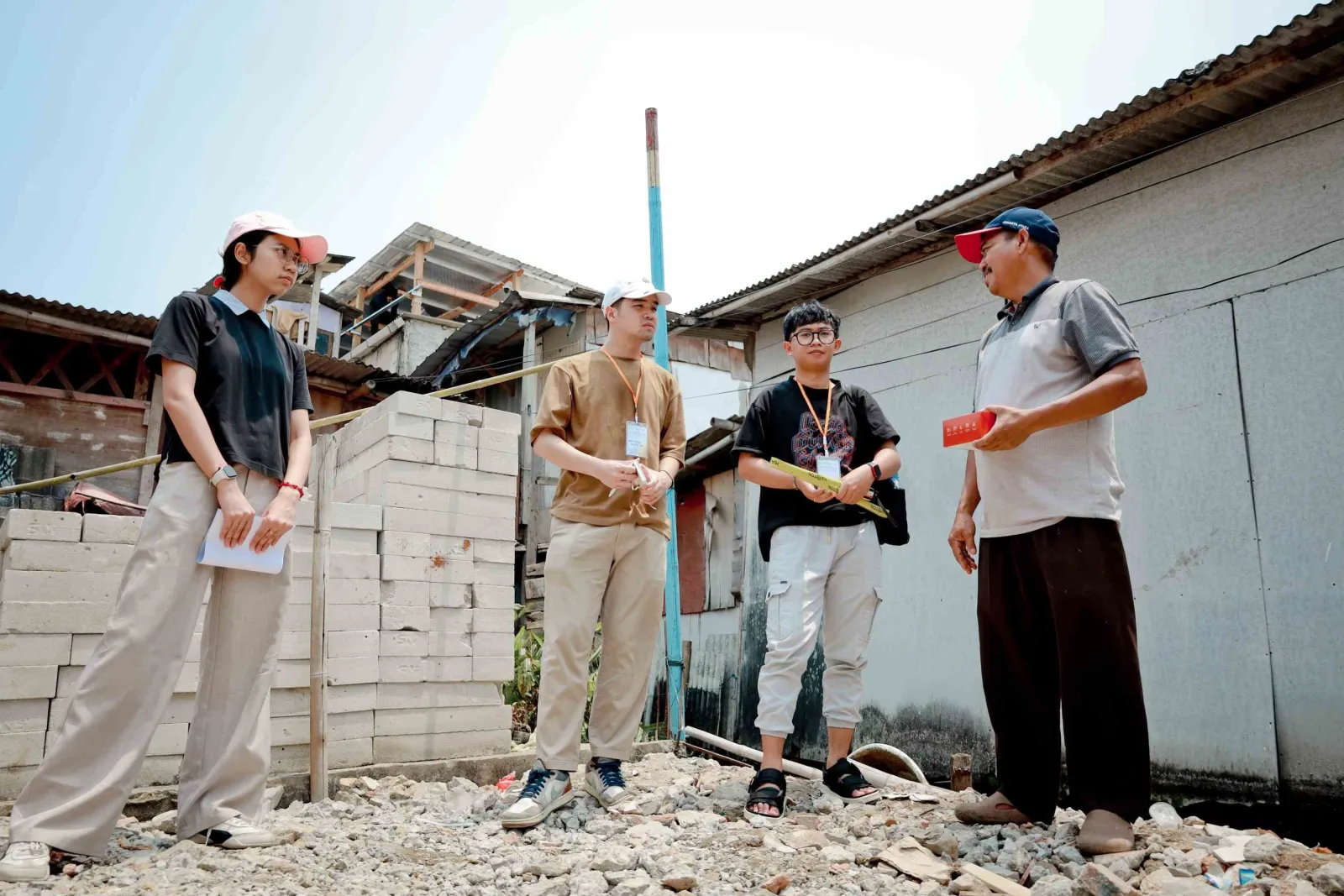
The toolkit is being developed through an approach grounded in real housing conditions and residents’ experiences. To test how it can be applied across different contexts, GBCI and RUJAK RCUS organized “Jelajah Kampung: Rumah Sehat, Rumah Hemat. Studi Lapangan Partisipatif dan Pengembangan Toolkit” on 19 October 2026 in Kampung Susun Akuarium and Kampung Muara Angke, North Jakarta.
The Rumah Sehat, Rumah Hemat Toolkit is designed to be applicable to different types of kampung housing, including landed homes and vertical kampung housing. The guide is also intended to support residents in independently identifying housing conditions and determining appropriate improvement strategies.
A Practical Approach to Healthier and More Efficient Homes
The toolkit begins by introducing the concept of the home in the context of carbon. This section explores how homes are understood, their relationship with the climate crisis, and approaches for considering residential spaces within this broader context.
The toolkit then covers several aspects that influence the health, comfort, and efficiency of homes, including natural ventilation, natural lighting, movement and spatial comfort, waste management, and safety related to materials and water.
It also distinguishes between approaches for homes that are yet to be built and existing homes. These approaches include identifying signs of potential problems and referring to relevant standards as a basis for developing improvement strategies.
Through the field study, these approaches were tested directly to understand how the toolkit can be applied to homes with different characteristics, needs, and challenges.
Learning from Two Different Housing Contexts
Kampung Susun Akuarium, located in the Pasar Ikan area of Penjaringan, North Jakarta, has a long history as a residential community dating back to the 1970s. The area experienced evictions on 11 April 2016, resulting in the demolition of 241 residential buildings. Some residents rejected relocation to public housing units, which they considered too far from their livelihoods as fishermen. Today, the development of Kampung Susun Akuarium has entered the completion stages of its first and second phases, with four blocks currently occupied by residents.
Meanwhile, Kampung Muara Angke is a coastal fishing community in northern Jakarta that has developed since the 1960s. Built on reclaimed swamp areas, the settlement faces a range of challenges, including tidal flooding, extreme heat, sea-level rise, limited access to clean water, and a lack of green space.
The community’s characteristics in Muara Angke are also closely connected to the local environment and livelihoods. Most residents are small-scale fishers, while others work in the salted-fish industry, informal sectors, and small-scale trading. As a result, housing needs in the area cannot be separated from the community’s economic activities and coastal environment.
The differences between the two locations are an important part of the toolkit development process. The field study provided an opportunity to examine how housing health, comfort, safety, and resource efficiency can be identified and assessed across different residential contexts.
Testing the Toolkit Through Participatory Fieldwork
The Jelajah Kampung activity involved university students working in groups to conduct field studies at both locations. Before going into the field, participants were introduced to the Rumah Sehat, Rumah Hemat Toolkit and briefed on the assessment process.
The group assigned to Kampung Susun Akuarium took part in a kampung walk to understand the surrounding environment and housing conditions. Meanwhile, the group visiting Kampung Muara Angke traveled to the study site before conducting assessments together with homeowners.
During the field study, participants used the toolkit to identify housing conditions directly with residents. The findings were then brought into discussion sessions, where participants developed recommended strategies based on the issues and potential identified in each home.
The process continued with group presentations and feedback from the assessment team. This session provided an opportunity to examine how observations from the field could be translated into relevant recommendations, while also generating feedback on how the toolkit can be further applied and improved.
The activity concluded with a session recognizing the ideas and work developed by the participating groups.
For GBCI and RUJAK RCUS, the field study is an important part of the development process, helping ensure that the Rumah Sehat, Rumah Hemat Toolkit remains grounded in the realities of communities. The approach places residents’ experiences and housing characteristics at the center of identifying challenges and developing practical improvement strategies.
Bringing Green Building Principles to the Scale of the Home
This initiative extends the application of green building principles to the residential scale, recognizing the role of housing in supporting occupant health and comfort, improving resource efficiency, and reducing environmental impacts. It also demonstrates how these principles can be translated into practical approaches that respond to the specific conditions and needs of residential communities.
The findings and lessons from Kampung Susun Akuarium and Kampung Muara Angke will inform the continued refinement of the Rumah Sehat, Rumah Hemat Toolkit, with the aim of strengthening its applicability across diverse housing typologies and contexts. Through this process, the toolkit is expected to provide a practical basis for communities and stakeholders to identify appropriate strategies for improving residential health, comfort, resource efficiency, and environmental performance.