IGBF Surabaya Brings Policy and Implementation Together to Advance Low-Carbon Infrastructure
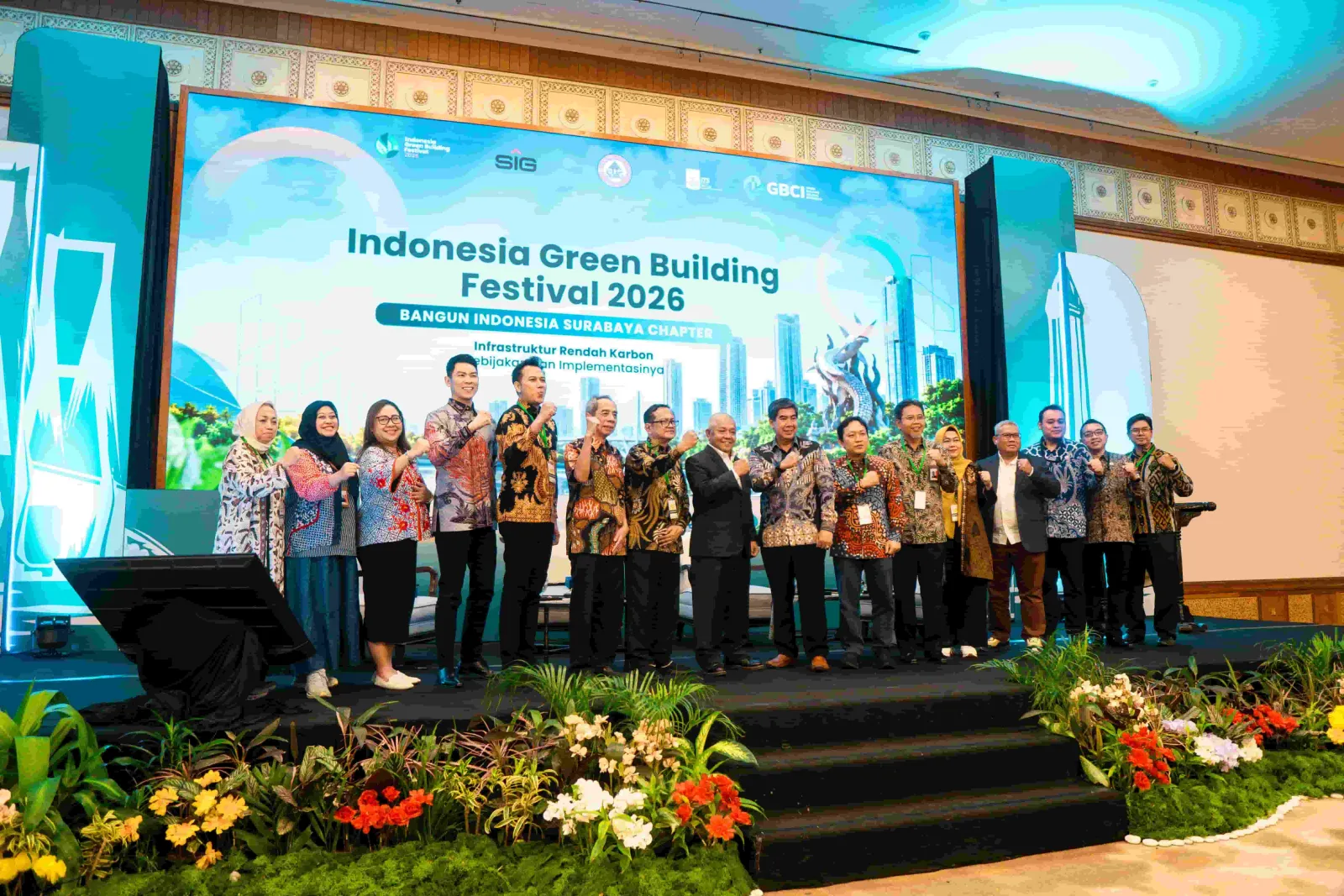
Surabaya, 29 September 2026 — Advancing low-carbon development in Indonesia requires stronger alignment between policy direction, project requirements, technology and material readiness, and the capacity of industry to translate these elements into implementation. This perspective was at the center of Bangun Indonesia: Surabaya Chapter, part of the Indonesia Green Building Festival (IGBF) 2026), held on Tuesday, 29 September 2026, at the Ballroom of Shangri-La Surabaya.
Under the theme “Low-Carbon Infrastructure: Policy and Implementation,” the Surabaya Chapter provided a platform to explore how low-carbon principles can be translated into the practical requirements of infrastructure development, maintenance, and rehabilitation.
The event was organized through a collaboration between Green Building Council Indonesia (GBCI), GBCI East Java, PT Semen Indonesia (Persero) Tbk (SIG), and PT Semen Gresik, with support from stakeholders across the infrastructure, academic, and industrial sectors.
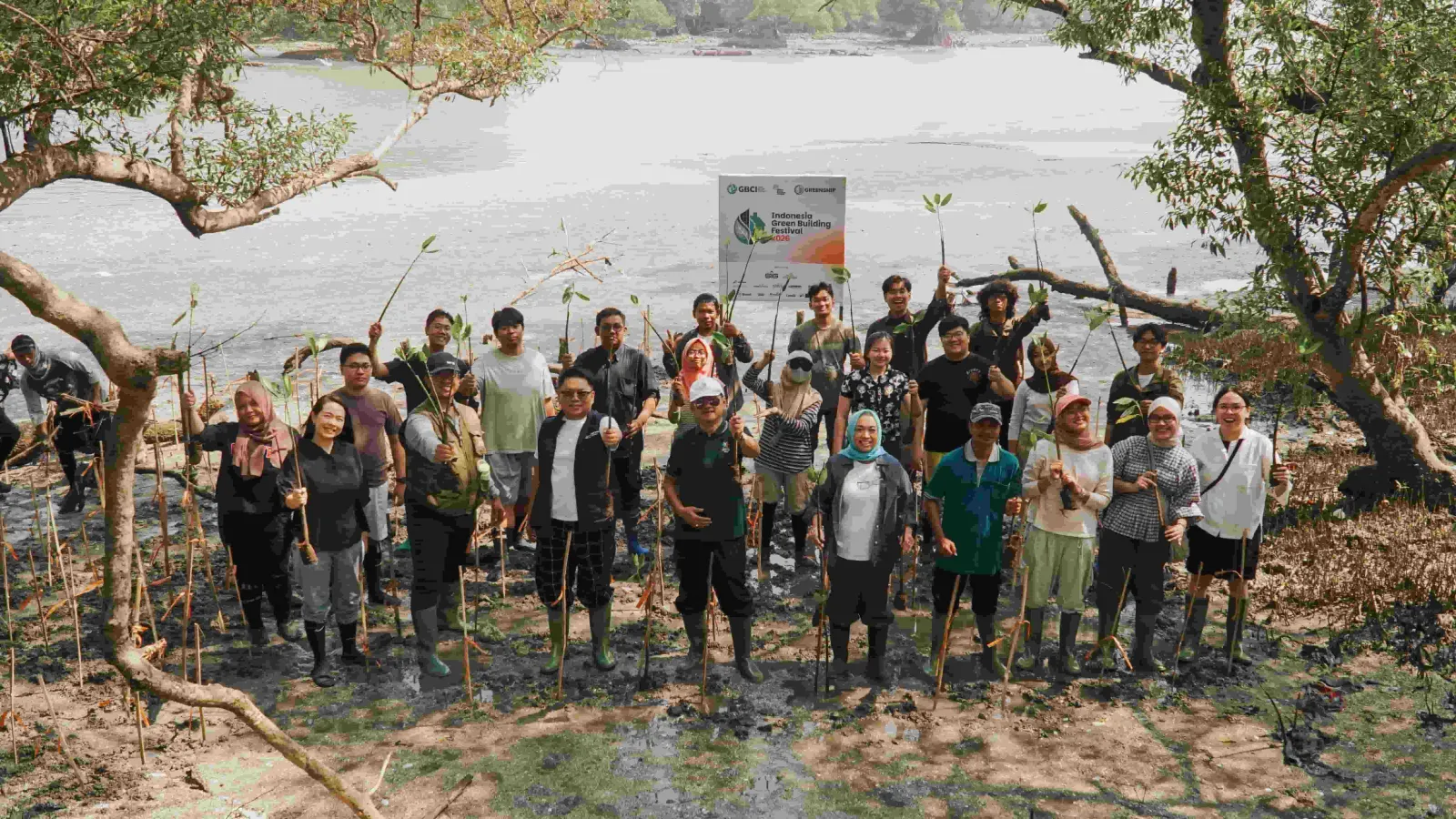
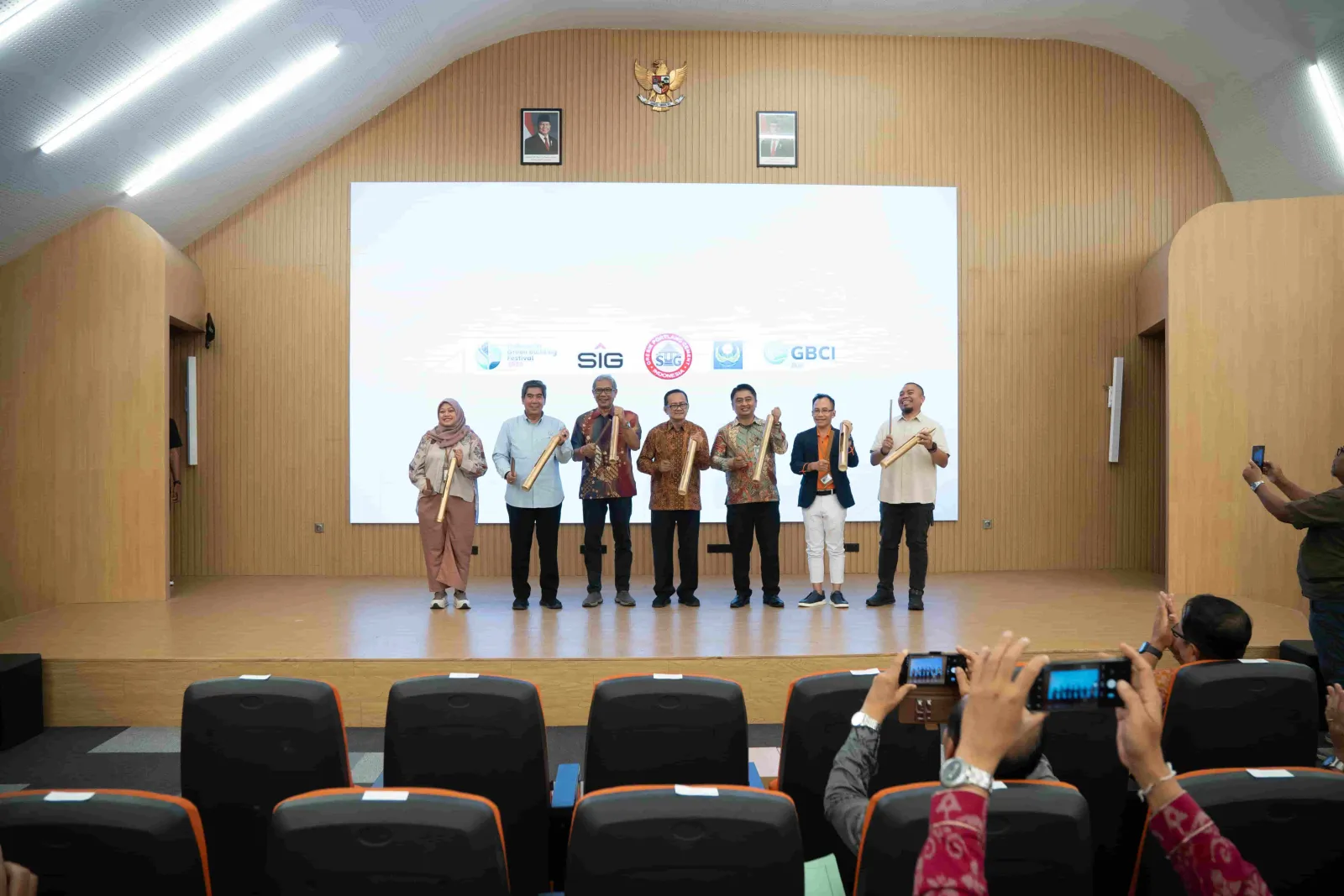
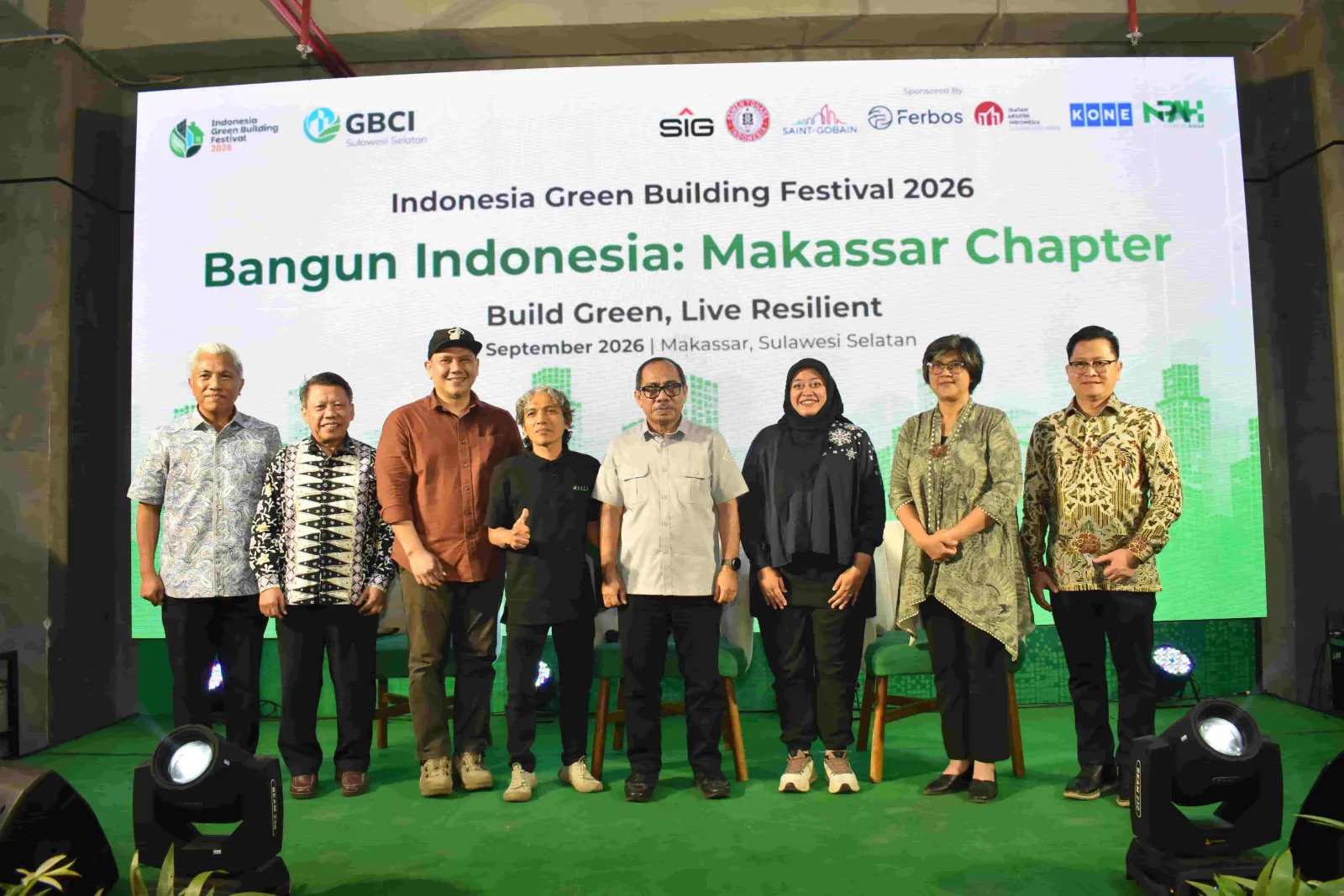
Surabaya formed an important part of the IGBF 2026 journey, which brought the spirit of “Bangun Indonesia” to different regions with their own development contexts and challenges. Following the festival’s opening in Jakarta, the program continued through Bandung, Yogyakarta, Makassar, Bali, and Surabaya before returning to Jakarta for the national closing. Across these six cities, the festival provided opportunities to explore different local perspectives while advancing a shared commitment to a greener and more sustainable Indonesia.
Connecting Policy, Project Requirements, and Market Demand
The Surabaya Chapter opened with remarks from Institut Teknologi Sepuluh Nopember (ITS), delivered by Prof. Ir. Priyo Suprobo, M.S., Ph.D., followed by remarks from Gatot Mardiana, President Director of PT Semen Gresik.
In his remarks, Gatot Mardiana emphasized the importance of industry readiness in responding to infrastructure development needs that increasingly incorporate sustainability considerations.
“The transition toward low-carbon development requires readiness across the entire value chain, including the materials industry. For Semen Gresik, efforts to reduce emissions need to go hand in hand with the ability to provide products that meet quality, safety, and project requirements. Collaboration among industry, government, academia, and development stakeholders is therefore essential to ensure that low-carbon material innovations can be implemented effectively and deliver value for Indonesia’s development,” said Gatot Mardiana, President Director of PT Semen Gresik.
The discussion continued through the morning talkshow, “Building the Foundation: Policy, Project Requirements, and Market Demand.” The session examined low-carbon infrastructure from the upstream perspective, connecting policy direction with project requirements and material needs in infrastructure development.
Javid Hurriyanto, S.T., M.T., discussed policy directions for the preservation of roads and bridges in Region I, including opportunities to incorporate low-carbon materials into maintenance and rehabilitation works.
The project perspective was further explored by Yusuf Adinegoro, S.T., M.Sc., Ph.D., who discussed implementation along the East Java–Bali national road corridor, including material demand, quality considerations, and opportunities to use lower-carbon cement products.
Meanwhile, Ir. Ignesjz Kemalawarta, MBA., Chairperson of GBCI, brought the discussion toward green performance benchmarks and product carbon declarations. This perspective expanded the conversation beyond individual building ratings toward an approach that considers the wider area and ecosystem surrounding infrastructure projects.
Together, these perspectives highlighted that the transition toward low-carbon infrastructure depends on multiple interconnected factors. Policy direction needs to align with project requirements, while material selection needs to address performance, quality, and the realities of implementation in the field.
Advancing Material Innovation and Industry Readiness
The afternoon session continued under the theme “Addressing the Challenges: Material Innovation, Quality Assurance, and Industry Readiness.”
Prof. Ir. Priyo Suprobo, M.S., Ph.D. discussed quality and structural safety requirements for bridges, including material and concrete product acceptance criteria from a regulatory perspective.
The discussion then moved toward design requirements and construction technology through a presentation by Ir. Arvilla Delitriana, who explored long-span bridge design and the performance requirements for high-performance concrete. Drawing on experience from the Jabodebek LRT long-span structures, the session also explored opportunities for collaboration in the application of lower-carbon cement.
From the industry perspective, Ir. Benny Ismanto discussed a portfolio of lower-carbon cement and binder solutions, quality consistency, and the technical support required to address the needs of the concrete industry.
Taken together, the sessions demonstrated that material innovation is part of a broader implementation ecosystem. Successfully deploying lower-carbon materials requires more than technological development. It also depends on quality assurance, industry readiness, technical support, and alignment between project requirements and product capabilities.
Bringing Low-Carbon Infrastructure into Regional Contexts
The Surabaya Chapter marked one of the final regional seminar chapters of IGBF 2026 before the festival concludes in Jakarta. Across the different chapters, discussions have addressed a range of issues, from buildings and urban areas to materials, climate resilience, and the specific development needs of different regions.
The journey has reinforced a common message: sustainable development requires collaboration across sectors and regions. The participation of GBCI East Java in the Surabaya Chapter also reflects GBCI’s commitment to bringing green building and sustainable development agendas closer to regional contexts and local development priorities.
During the closing session, GBCI presented a recap of key outcomes and common themes emerging from the five regional seminar chapters held leading up to Surabaya. The session also outlined follow-up initiatives and further collaboration between GBCI, GBCI East Java, SIG, and universities.
“The Indonesia Green Building Festival 2026 journey across different cities has shown that each region has its own context, needs, and challenges. At the same time, the entire series has highlighted one shared need: building collaboration that can translate sustainability principles into tangible implementation. Surabaya provided an important platform to connect policy, infrastructure needs, material innovation, and industry readiness. Together with GBCI East Java and our partners, GBCI will continue to create opportunities for collaboration so that the knowledge and practices developed collectively can evolve in response to regional contexts and contribute to broader impact across Indonesia,” said Ir. Ignesjz Kemalawarta, MBA., Chairperson of Green Building Council Indonesia.
For GBCI, the IGBF 2026 journey forms part of a broader effort to bring discussions on green buildings and sustainable development closer to the practical needs of different regions. The distinct characteristics of each city provide opportunities to exchange knowledge, share experience, and develop approaches that respond to local challenges.
From Jakarta to Surabaya, the shared direction remains clear: building a greener, more resilient, and more sustainable Indonesia through collaboration that can be translated into practice.